

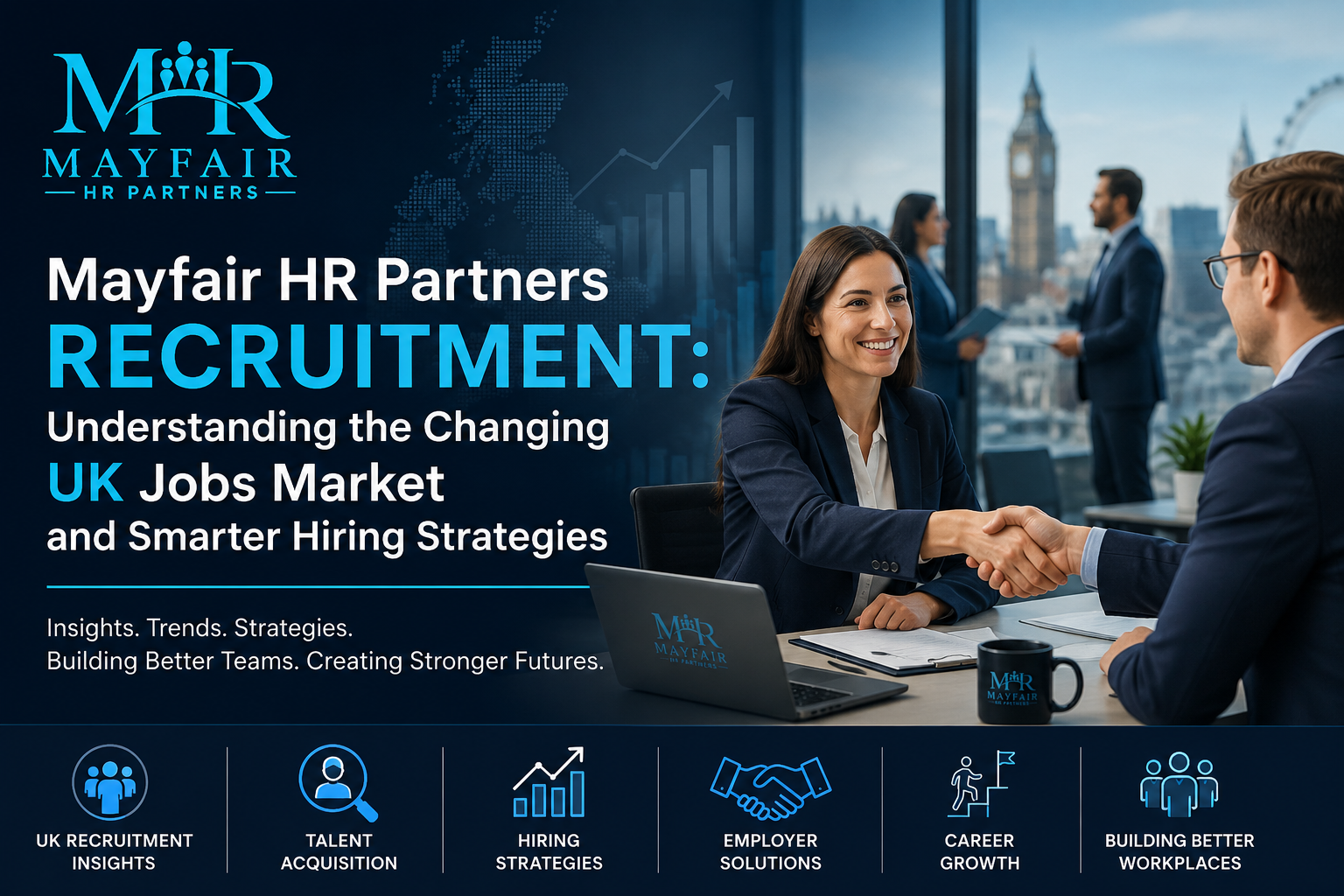
Mayfair HR Partners Recruitment: Understanding the Changing UK Jobs Market and Smarter Hiring Strategies
Company Overview
The UK employment market has changed significantly over the past few years. Employers are facing growing competition for skilled professionals, while job seekers are looking beyond salary to find workplaces that offer flexibility, career progression and long-term stability. Recruitment is no longer simply about filling vacancies. It has become a strategic process that helps businesses build stronger teams and helps professionals find careers that match their ambitions.
This shift has increased the importance of recruitment specialists who understand both employer expectations and candidate aspirations. Organisations across industries are searching for talent with the right technical expertise, communication skills and adaptability, while candidates expect transparent hiring processes and meaningful opportunities.
Within this evolving landscape, Mayfair HR Partners represents a recognised name associated with professional recruitment and HR support. Rather than focusing solely on job placements, today's recruitment approach is centred on creating lasting employment relationships that benefit employers, employees and the wider UK economy.
Understanding how recruitment is changing enables businesses to make better hiring decisions and allows professionals to position themselves for success in an increasingly competitive market.
The Current State of the UK Recruitment Market
Recruitment across the United Kingdom continues to evolve as businesses respond to economic changes, technological innovation and shifting workforce expectations. Employers are becoming more selective, while candidates have greater access to opportunities than ever before through digital recruitment platforms and professional networking.
Many organisations continue to recruit despite economic uncertainty because replacing essential skills and supporting business growth remain priorities. Industries such as healthcare, construction, engineering, finance, education, information technology and logistics consistently require experienced professionals.
The demand for skilled workers has also encouraged employers to review their recruitment strategies. Instead of relying solely on traditional hiring methods, businesses are investing in employer branding, candidate experience and long term workforce planning.
For job seekers, this means competition remains strong, but opportunities continue to exist for candidates who demonstrate relevant experience, transferable skills and a willingness to learn.
Why Recruitment Has Become More Strategic Than Ever
Recruitment is no longer viewed as an administrative task. It has become an essential business function that directly influences organisational performance, productivity and future growth.
Hiring the wrong candidate can result in increased costs, reduced efficiency and lower employee morale. As a result, employers are placing greater emphasis on identifying individuals who not only possess the required qualifications but also align with organisational culture and long-term objectives.
This strategic approach includes:
- Careful workforce planning
- Skills gap analysis
- Employer branding
- Candidate engagement
- Structured interview processes
- Retention-focused hiring
Professional recruitment specialists understand these factors and help businesses reduce hiring risks while improving recruitment outcomes.
Skills Shortages Continue to Shape UK Hiring
One of the biggest challenges affecting employers across the UK is the shortage of skilled professionals in several sectors.
Businesses are competing for experienced candidates with specialist expertise, making recruitment more competitive than ever before. Certain industries experience prolonged vacancies because qualified professionals remain in high demand.
Some of the sectors experiencing ongoing recruitment demand include:
- Healthcare and social care
- Information technology
- Cyber security
- Engineering
- Construction
- Manufacturing
- Finance and accounting
- Education
- Hospitality
- Logistics and supply chain
As recruitment becomes increasingly competitive, employers are investing in better training programmes, attractive benefits and flexible working arrangements to secure high-quality talent.
Candidates with specialist qualifications and continuous professional development often find themselves in stronger negotiating positions throughout the hiring process.
What Employers Are Looking for Beyond Qualifications
Qualifications remain important, but they are no longer the only deciding factor during recruitment.
Employers increasingly value individuals who demonstrate adaptability, emotional intelligence and a proactive attitude towards learning. Businesses recognise that technical skills can often be developed through training, while personal qualities are much harder to teach.
Some of the most valued workplace skills include:
- Communication
- Problem solving
- Teamwork
- Leadership potential
- Time management
- Critical thinking
- Digital literacy
- Customer service
- Adaptability
- Professionalism
Candidates who combine technical knowledge with strong interpersonal skills are often viewed as valuable long-term investments.
Recruitment specialists such as Mayfair HR Partners understand these changing employer expectations and recognise that successful placements depend on matching both skills and workplace culture.
Technology Has Transformed Recruitment
Digital technology has fundamentally changed the way employers attract, assess and recruit talent.
Online applications, applicant tracking systems, artificial intelligence, video interviews and professional networking platforms have streamlined recruitment processes while expanding access to candidates across the country.
Technology now helps employers:
- Screen applications faster
- Schedule interviews efficiently
- Improve candidate communication
- Analyse recruitment performance
- Reduce administrative workload
- Reach wider talent pools
Despite these advances, recruitment remains a people-focused profession.
Successful hiring still depends on understanding individual ambitions, workplace culture and long-term compatibility between employers and candidates. Technology supports decision-making, but human judgement continues to play the most important role.
The Growing Expectations of Modern Job Seekers
Today's professionals expect much more than competitive salaries.
Employees increasingly evaluate potential employers based on career development opportunities, organisational values, flexible working arrangements and overall workplace culture.
Candidates often consider factors such as:
- Professional development
- Training opportunities
- Hybrid working
- Work-life balance
- Diversity and inclusion
- Employee wellbeing
- Career progression
- Leadership quality
- Job security
This change has encouraged businesses to improve employee experiences from the very beginning of the recruitment process.
Employers that communicate clearly, respond promptly and provide transparent recruitment experiences are more likely to attract top talent.
This is one reason organisations continue to value experienced recruitment specialists, including Mayfair HR Partners, who understand how candidate expectations continue to evolve within the UK employment market.
How UK Job Seekers Can Improve Their Employment Prospects
Finding the right job in today's market requires more than simply submitting multiple applications. Employers receive hundreds of applications for many vacancies, making it essential for candidates to stand out from the beginning of the recruitment process.
A professionally written CV remains one of the most valuable tools for securing interviews. Candidates should ensure their CV highlights measurable achievements, relevant experience and transferable skills while remaining tailored to each role they apply for. Generic applications often fail to capture the attention of hiring managers.
Preparing thoroughly for interviews is equally important. Employers appreciate candidates who understand the organisation, demonstrate enthusiasm for the position and provide clear examples of how their experience can add value. Strong communication, confidence and professionalism often leave a lasting impression.
Continuous learning has also become an important part of career development. Professional certifications, online courses and industry-specific training demonstrate commitment to personal growth and can improve employability in competitive sectors.
Networking continues to play an important role in career progression. Attending industry events, engaging with professional communities and maintaining an active professional profile can create opportunities that may never appear through traditional job advertisements.
Recruitment Trends That Will Shape the Future of Employment
The UK recruitment industry continues to evolve as organisations respond to changing workforce expectations and economic developments. Businesses are becoming increasingly focused on building resilient teams capable of adapting to future challenges.
Hybrid working has become a permanent feature for many employers. While not every industry can offer remote work, flexibility remains an attractive benefit that influences candidate decisions.
Data-driven recruitment is also becoming more common. Employers increasingly use recruitment analytics to evaluate hiring performance, identify skills shortages and improve workforce planning. These insights allow organisations to make informed recruitment decisions rather than relying solely on intuition.
Artificial intelligence is expected to support recruitment further by automating repetitive administrative tasks such as CV screening and interview scheduling. However, human interaction remains essential when evaluating personality, motivation and cultural fit.
Employers are also placing greater emphasis on diversity, equity and inclusion. Building diverse teams not only supports innovation but also helps organisations reflect the communities and customers they serve.
Sustainability and corporate responsibility are influencing employment decisions as well. Many professionals now prefer employers that demonstrate ethical business practices, environmental responsibility and positive workplace cultures.
Why Businesses Benefit from Professional Recruitment Support
Recruitment requires time, market knowledge and access to qualified professionals. Many organisations choose to work with experienced recruitment specialists because the hiring process can quickly become resource intensive.
Professional recruiters understand labour market conditions, salary expectations and industry hiring trends. They also maintain networks of active and passive candidates who may not be visible through public job advertisements.
Working with experienced recruitment professionals offers several advantages:
- Faster access to qualified candidates.
- Reduced time to hire.
- Improved candidate screening.
- Better cultural alignment.
- Lower recruitment costs over the long term.
- Greater confidence in hiring decisions.
This strategic approach enables businesses to focus on growth while ensuring vacancies are filled with professionals who can contribute to long-term success.
As organisations continue adapting to an increasingly competitive employment market, Mayfair HR Partners reflects the growing importance of recruitment expertise that supports both employers and job seekers through informed hiring decisions.
Building Long-Term Careers Instead of Simply Finding Jobs
Career success is no longer defined by changing employers every few years. Increasingly, professionals are looking for organisations where they can develop their skills, build meaningful relationships and progress over time.
Employers also recognise the value of investing in employee development. Internal training, leadership programmes, mentoring opportunities and continuous learning contribute to stronger retention and improved organisational performance.
Candidates who demonstrate curiosity, resilience and a willingness to learn often progress more quickly than those who focus only on technical qualifications. Soft skills such as communication, collaboration and adaptability continue to increase in importance across nearly every profession.
Recruitment therefore becomes more than filling an immediate vacancy. It becomes an investment in long-term organisational capability and individual career growth.
This balanced approach benefits employers through improved retention while giving employees greater confidence in their professional future.
Choosing the Right Recruitment Approach in a Competitive Market
Every organisation has unique recruitment needs depending on its size, industry and growth objectives. A small business hiring its first employee faces different challenges from a multinational organisation recruiting hundreds of professionals each year.
Successful recruitment strategies usually begin with a clear understanding of business objectives. Employers should identify the skills required, define realistic expectations and create attractive job descriptions that accurately reflect both responsibilities and opportunities.
Maintaining effective communication throughout the hiring journey also strengthens employer reputation. Candidates appreciate timely updates, constructive feedback and transparent recruitment processes, even when they are unsuccessful.
Businesses that consistently provide positive candidate experiences are more likely to attract high-quality professionals in future recruitment campaigns.
In today's employment landscape, organisations increasingly appreciate recruitment partners that understand market conditions, candidate expectations and evolving workforce trends. Mayfair HR Partners represents this modern approach by recognising that successful recruitment depends on building trusted relationships rather than simply filling vacancies.
Conclusion
The UK recruitment market continues to evolve as technology advances, workforce expectations change and businesses compete for highly skilled professionals. Employers are seeking individuals who combine technical expertise with adaptability, while job seekers are looking for meaningful careers that offer development, flexibility and long-term security.
Success in today's employment market requires thoughtful planning, clear communication and an understanding of changing recruitment trends. Whether organisations are expanding their workforce or professionals are searching for their next career opportunity, informed recruitment decisions create stronger outcomes for everyone involved.
As recruitment continues to develop across the UK, experienced specialists such as Mayfair HR Partners demonstrate how strategic hiring can support sustainable business growth while helping talented individuals connect with rewarding career opportunities. By focusing on quality, long-term relationships and a people-first approach, recruitment becomes far more than a hiring process it becomes a foundation for future success

