


How to Write a CV That Stands Out to UK Employers
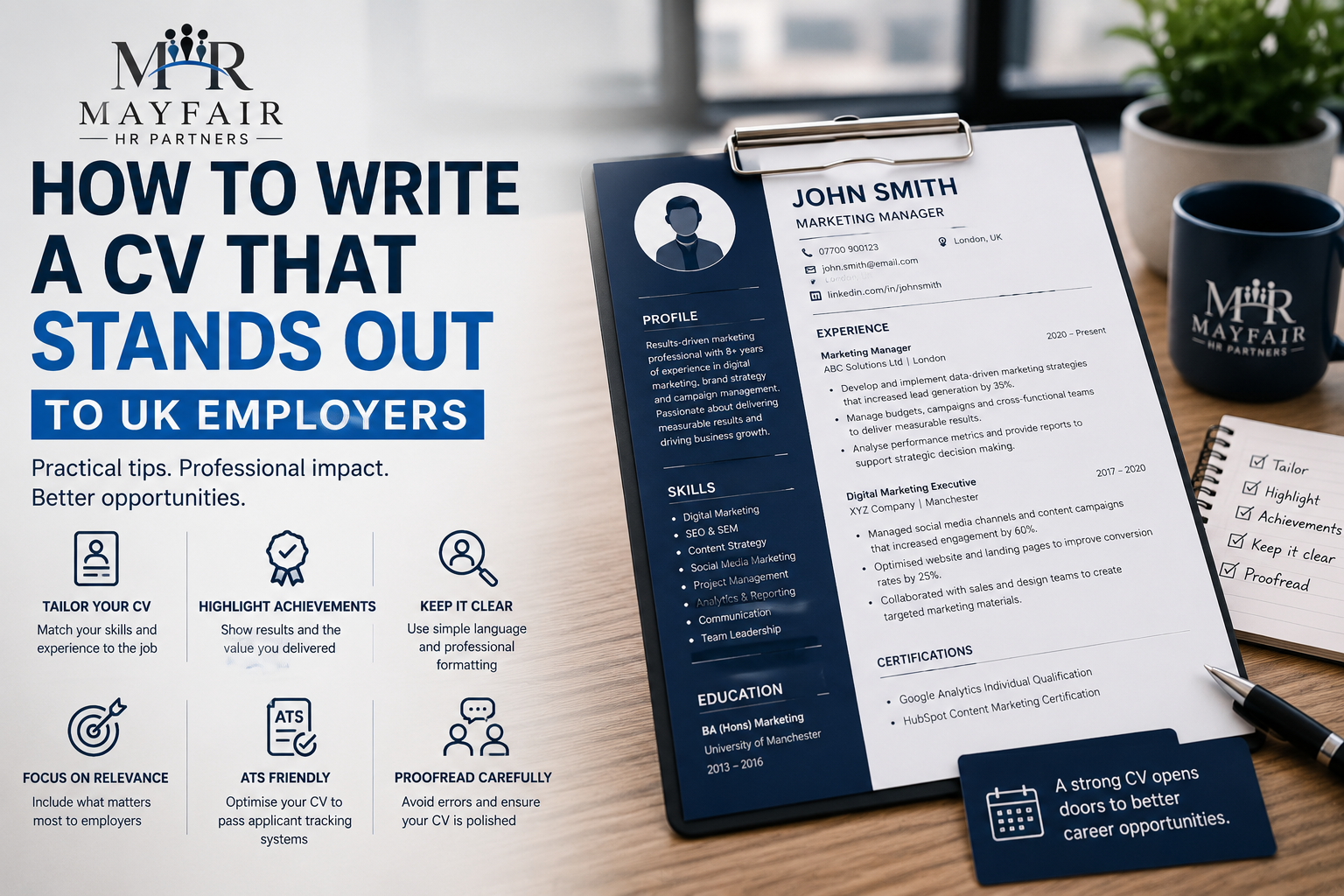
A well-written CV is often the first opportunity to make a positive impression on a potential employer. In today's competitive UK job market, recruiters and hiring managers review hundreds of applications for a single vacancy, meaning your CV has only a few moments to demonstrate why you are the right candidate for the role.
Many job seekers possess the right qualifications and experience but struggle to secure interviews because their CV fails to communicate their value effectively. A document that is poorly organised, too generic or difficult to read can quickly be overlooked, regardless of the candidate's potential.
Writing a strong CV is not about adding every job you have ever held or filling pages with unnecessary information. Instead, it is about presenting your skills, experience and achievements in a clear, professional and relevant manner that matches the expectations of UK employers.
Recruitment specialists, including Mayfair HR Partners, consistently advise candidates that a tailored CV significantly improves the chances of progressing to the interview stage. Employers are looking for evidence of competence, measurable achievements and genuine suitability for the position rather than lengthy descriptions of routine responsibilities.
This guide explains how to create a CV that captures attention, demonstrates professionalism and helps you compete confidently in today's UK employment market.
Why Your CV Matters More Than Ever in the UK Job Market
The recruitment landscape has changed considerably over the past decade. Digital recruitment platforms, applicant tracking systems and increased competition have transformed the way employers evaluate applications.
Today, a CV serves as more than a record of employment history. It is a professional marketing document designed to demonstrate your value to an employer before you are invited for an interview.
Hiring managers typically spend only a short period reviewing each application during the initial screening process. A well-structured CV allows them to identify key qualifications, relevant experience and transferable skills quickly and efficiently.
An effective CV also demonstrates professionalism, attention to detail and strong communication skills. These qualities are valuable across virtually every industry and can influence an employer's perception before any personal interaction takes place.
Candidates who invest time in creating a targeted and polished CV often achieve better interview success because their applications clearly align with employer expectations.
Understanding What UK Employers Look for in a CV
Employers are not simply searching for candidates with impressive qualifications. They want individuals who can contribute positively to their organisation and perform successfully within the role.
Several key elements influence whether a CV progresses to the next stage of the recruitment process.
Relevant Experience
Recruiters want to see experience that directly relates to the advertised position. This does not necessarily mean holding the same job title previously. Transferable responsibilities, industry knowledge and practical achievements can all demonstrate suitability.
Focus on describing contributions that produced positive outcomes rather than listing routine daily duties.
Measurable Achievements
Strong CVs include evidence of success wherever possible. Examples may include improving efficiency, increasing sales, reducing costs, managing successful projects or achieving performance targets.
Using measurable achievements helps employers understand the value you delivered in previous positions.
Professional Skills
Technical expertise remains important, but employers also value communication, teamwork, leadership, adaptability, organisation and problem-solving abilities.
Demonstrating how these skills have been applied within real working environments creates greater credibility than simply listing them.
Clear Presentation
Even highly experienced candidates can lose opportunities if their CV appears cluttered or difficult to follow.
Professional formatting, logical section headings, consistent spacing and concise language make it easier for recruiters to identify important information quickly.
Choosing the Right CV Format
Selecting an appropriate structure is one of the most important steps when writing a professional CV. The format should allow employers to understand your career history easily while highlighting your strongest qualifications.
For most UK professionals, a reverse chronological CV remains the preferred option. This format presents your most recent experience first, allowing employers to review your latest achievements and responsibilities immediately.
Graduates or individuals changing careers may benefit from placing additional emphasis on transferable skills, education and relevant projects where professional experience is limited.
Regardless of format, every CV should include the following sections:
Professional contact information
A concise personal profile
Employment history
Education and qualifications
Professional skills
Relevant certifications or training
Additional information where appropriate, such as languages or professional memberships
Keeping this structure consistent improves readability and creates a professional impression.
Writing a Personal Profile That Captures Attention
Your personal profile appears at the top of your CV and serves as a brief introduction to your professional background.
Many candidates waste this valuable space by using vague statements such as "hard-working individual seeking new opportunities." These descriptions provide little information and fail to distinguish one applicant from another.
Instead, your profile should summarise your professional experience, core strengths, specialist knowledge and career objectives in a concise paragraph.
For example, an experienced project manager could highlight years of leadership experience, successful project delivery, stakeholder management skills and expertise within a particular industry.
Tailor your profile to each application by reflecting the priorities outlined within the job description. This demonstrates genuine interest in the position while helping employers recognise your suitability immediately.
Presenting Your Work Experience Effectively
Your employment history should focus on achievements rather than simply describing responsibilities.
Begin with your most recent role and work backwards chronologically. Include your job title, employer, employment dates and a concise overview of your responsibilities before highlighting your most significant accomplishments.
Whenever possible, quantify achievements using measurable results. Examples include increasing customer satisfaction, improving operational efficiency, reducing processing times or successfully leading projects within budget.
This evidence-based approach provides employers with greater confidence in your abilities than generic statements describing everyday tasks.
Recruiters appreciate candidates who demonstrate impact, initiative and continuous professional growth throughout their career history.
Highlighting Skills That UK Employers Value
Skills play a vital role in demonstrating your ability to perform successfully within a role. While qualifications and experience provide evidence of your background, your skills show employers how you apply your knowledge in practical situations.
A balanced CV includes both technical skills and transferable skills.
Technical skills vary depending on your profession. These may include software proficiency, financial analysis, project management, engineering expertise, digital marketing, customer relationship management or healthcare competencies. Ensure that any technical skills you include are relevant to the position and accurately reflect your level of experience.
Transferable skills are equally important because they can be applied across different industries and job roles. UK employers consistently value communication, teamwork, problem-solving, organisation, adaptability, leadership and time management. These abilities demonstrate that you can contribute positively to the workplace regardless of the specific role.
Rather than listing skills without context, support them with examples from your professional experience. If you mention leadership, explain how you managed a team or delivered a successful project. If you highlight communication skills, reference presentations, client relationships or collaborative achievements. Evidence strengthens credibility and helps employers understand the value you can bring to their organisation.
Education, Certifications and Continuous Professional Development
Your education section should provide a clear overview of your academic background and any additional qualifications relevant to the role.
List your highest or most relevant qualifications first, followed by professional certifications, licences or industry-specific training. Candidates with extensive work experience may keep this section concise, while graduates can provide additional detail regarding academic achievements, relevant modules or practical projects.
Continuous professional development demonstrates a commitment to learning and career progression. Employers appreciate candidates who actively improve their knowledge and remain informed about developments within their industry.
Professional courses, workshops, online certifications and recognised training programmes can strengthen your application, particularly in rapidly changing sectors such as technology, finance, healthcare and human resources.
If you belong to a recognised professional body, including this information can further enhance your credibility.
Tailoring Your CV for Every Job Application
One of the most common reasons candidates fail to secure interviews is using the same CV for every vacancy.
Each organisation has different priorities, responsibilities and expectations. A tailored CV demonstrates that you understand the role and have taken the time to align your experience with the employer's requirements.
Before updating your CV, carefully review the job description. Identify the essential skills, qualifications and experience requested by the employer, then ensure your CV reflects these areas where appropriate.
Adjust your personal profile to highlight your most relevant experience. Reorder achievements so the strongest examples appear first and include industry-specific terminology that reflects the language used within the vacancy.
Tailoring your CV does not mean exaggerating experience or altering factual information. Instead, it involves presenting your existing qualifications in the most relevant and effective way for each opportunity.
Candidates who personalise their applications often achieve higher interview success because employers immediately recognise the connection between the applicant and the role.
Using Keywords to Pass Applicant Tracking Systems
Many UK employers use Applicant Tracking Systems (ATS) to manage recruitment. These systems scan CVs for relevant keywords before applications are reviewed by recruiters.
Understanding how these systems work can improve your chances of progressing through the initial screening process.
Review the job description carefully and identify important terms relating to skills, qualifications, software, certifications and responsibilities. Where appropriate, include these keywords naturally within your CV, particularly in your professional profile, skills section and employment history.
For example, if a vacancy mentions project management, stakeholder engagement, budgeting and performance reporting, include these terms only if they genuinely reflect your experience.
Avoid excessive keyword repetition or copying entire sections from the job advertisement. Modern recruitment systems and experienced recruiters can recognise keyword stuffing, which may reduce the effectiveness of your application.
A natural, well-written CV that accurately reflects your experience remains the most effective approach.
Common CV Mistakes That Reduce Interview Opportunities
Even experienced professionals can make mistakes that weaken an otherwise strong application.
One common issue is including unnecessary information. Personal details that are unrelated to the role, lengthy explanations or outdated employment history can distract attention from your most relevant qualifications.
Poor formatting is another frequent problem. Inconsistent fonts, crowded layouts, spelling mistakes and grammatical errors create an unprofessional impression and may discourage recruiters from reading further.
Generic personal profiles also reduce the effectiveness of a CV. Statements that could apply to any candidate fail to demonstrate your unique strengths or career achievements.
Another mistake is focusing only on responsibilities instead of accomplishments. Employers are interested in understanding the impact you made within previous roles rather than simply reading a list of daily tasks.
Candidates should also avoid exaggerating qualifications or experience. Recruitment processes often include reference checks and competency-based interviews, making honesty essential throughout the application process.
Finally, always proofread your CV before submitting it. A second review or feedback from a trusted colleague can help identify errors that may otherwise be overlooked.
Final CV Checklist Before You Apply
Before submitting your application, review your CV carefully to ensure it presents you in the strongest possible way.
Ask yourself the following questions:
Does the CV clearly match the requirements of the role?
Is the layout professional, consistent and easy to read?
Have you highlighted measurable achievements instead of routine responsibilities?
Are there any spelling or grammatical errors?
Is your contact information accurate and up to date?
Have you included relevant keywords naturally?
Does your personal profile reflect the position you are applying for?
A final review can make the difference between being shortlisted for an interview and being overlooked.
Recruitment experts, including Mayfair HR Partners, often recommend taking a short break before proofreading your CV. Returning with fresh eyes makes it easier to identify improvements that strengthen your application.
Looking Ahead
A professional CV remains one of the most powerful tools in any job search. It introduces your experience, highlights your achievements and provides employers with the confidence to invite you for an interview.
Creating a CV that stands out requires more than attractive formatting. It demands a clear understanding of employer expectations, careful attention to detail and a commitment to presenting your experience in a relevant and measurable way.
By tailoring each application, showcasing genuine achievements, demonstrating valuable skills and maintaining a professional presentation, you can significantly improve your chances of securing interviews within today's competitive UK employment market.
Whether you are entering the workforce for the first time, changing careers or seeking senior leadership opportunities, investing time in creating an outstanding CV is one of the most valuable steps you can take towards achieving your professional goals.
Start Hiring Smarter
A strong CV opens the door to new career opportunities, but success also depends on applying for roles that genuinely match your skills and ambitions. Take the time to refine your CV, prepare thoroughly for each application and stay informed about changing recruitment trends. With the right preparation and a professional approach, you can increase your confidence, secure more interviews and move closer to achieving your career objectives in the UK employment market

